Most people have had their BMI checked at some point. At the GP. Maybe for insurance. At the gym. Or from an online calculator. You get a number, then a label, often on a traffic light chart. Green. Amber. Red.
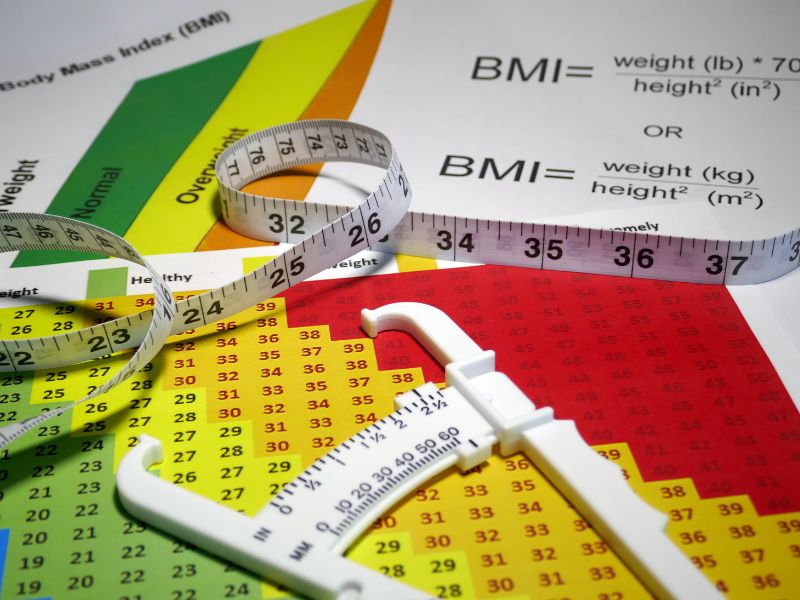
If you’re not in the green, you’ve probably looked at it and thought, “Mmm… but I’ve got big bones.” “But muscle weighs more than fat, right?” “That can’t be right, I train more than most people I know.” Or at least wondered how a single number is meant to sum you up.
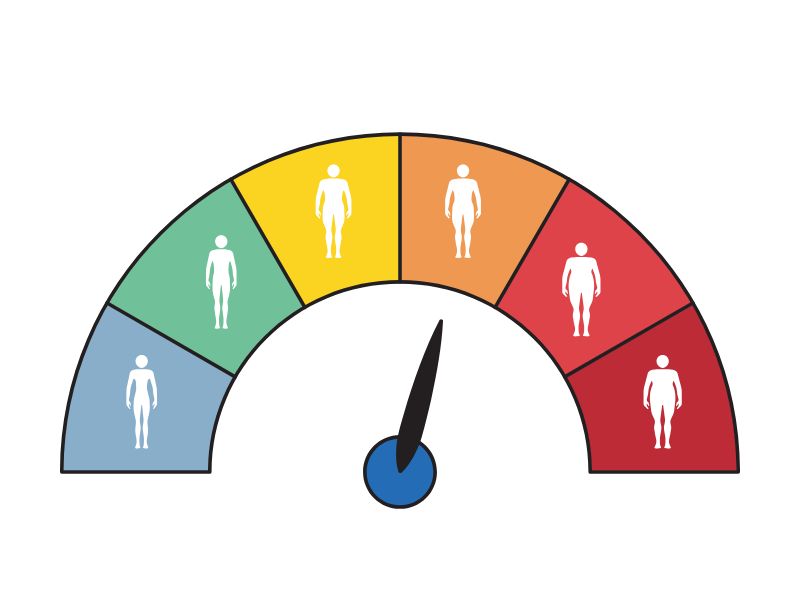
What is BMI?
BMI stands for Body Mass Index.
Body → your body weight
Mass → your weight
Index → a number used to compare or categorise
BMI compares your weight to your height.
That’s it.
No scan. No insight into muscles. No context.
- It doesn’t measure body fat.
- It doesn’t distinguish between muscle and fat.

- It doesn’t assess fitness.
- It doesn’t tell you how healthy you are.
- It just puts you into a category.
Useful in some ways, misleading in others. BMI is based on a nearly 200-year-old idea. Impressive, just not when it’s still being used to judge your health today.
Why is it used?
Because it’s simple.
It’s quick.
It’s free.
It works across large healthcare systems like the NHS.
And to be fair, it does have value. BMI tracks general health risk across large groups of people.
But that’s not the same as understanding an individual. You’re not a population average.
Where it falls short
Two people can have the same BMI and very different health.
One might be active and strong.
Another might be inactive, sleeping poorly, and starting to show early signs of health issues.
Same number. Completely different picture.
That’s the bit the chart doesn’t show you.
It doesn’t work the same for everyone
BMI doesn’t reflect body composition equally across all people.
Biological sex plays a role.
- On average, men carry more visceral fat, while women tend to carry more under the skin. Hormones and ageing shift this over time.
Then there’s ethnicity.
- People from South Asian backgrounds, including those with Indian, Pakistani, Bangladeshi and Sri Lankan heritage, tend on average to have higher body fat and greater metabolic risk at lower BMI.
- People from Black backgrounds, including those with African and African-Caribbean heritage, often have higher lean mass and lower body fat at the same BMI.
These are general patterns, not rules. But it means the same BMI doesn’t always mean the same thing.
How does this affect real care
Sometimes BMI is used in decisions about treatment or referrals.
That can lead to situations like this:
Someone has knee pain. They’re active and trying to build strength, but progress is slowing. Their BMI is 29, and they’re told to lose weight before being referred.
On paper, that sounds reasonable.
But no one has looked at how they’re moving, their strength, or whether weight is even the main issue. BMI becomes the focus. Everything else gets overlooked.
Or the opposite.
Someone has a “normal” BMI, so everything looks fine on paper.
But they’re not very active.
Their sleep is poor.
Their energy is low.
Early warning signs are starting to show, but nothing gets picked up because the number looks fine. Same tool. Two different people. Both were slightly misled.
What should be looked at as well?
BMI can be a starting point. But it shouldn’t be the whole picture.
Other simple things matter:
- Where weight is carried, especially around the waist
- Activity levels and strength
- Sleep and recovery
- Basic health checks like blood sugar, cholesterol, and blood pressure
These give a clearer picture of what’s actually going on.
Less guesswork. More reality.
What’s better than BMI?
There are better ways to build a picture.
Waist-to-height ratio shows where fat sits.
Waist circumference reflects central load.
Body fat percentage separates fat from muscle.
Waist-to-hip ratio adds context.

Then you’ve got bloods.
- Glucose and HbA1c give an indication of blood sugar control.
- Lipids reflect cholesterol and fat levels in the blood.
- Blood pressure shows how hard the cardiovascular system is working.
That’s actual risk, not assumed risk.
What this means in practice
BMI doesn’t need replacing. It needs context.
In a state-funded system, time, cost, and consistency matter. That’s part of why BMI persists.
But small additions go a long way.
- A simple waist measure adds more than BMI alone.
- Basic blood markers, where appropriate, show actual risk.
- And how someone moves and functions often tells you more than a number.
This isn’t about adding complexity. It’s about not relying on one measure when the decision matters.
BMI can be a starting point. It just shouldn’t be the decision.
What this means for you
If you’ve been given a BMI, it’s worth asking:
- What else has been considered?
- Has anyone looked beyond the number?
BMI can be useful. But on its own, it doesn’t tell the full story.
The bottom line
BMI can work well for looking at large groups of people. But when it comes to you, it’s only one piece of your health. It was never going to fit neatly into a traffic light chart anyway.
References
World Health Organization (2004) Appropriate body-mass index for Asian populations and its implications. The Lancet.
National Institute for Health and Care Excellence (NICE) (2023) Overweight and obesity management (NG246).
Rubino, F. et al. (2023). Time to move beyond BMI? BMJ.
Disclaimer:
This blog provides general information only and is not a substitute for medical advice, diagnosis, or treatment. Please consult a qualified healthcare professional for advice tailored to your individual needs.