Sepsis is back in the news again, and sadly, for the same reason: the tragedies continue. I am republishing this post to help raise awareness because early recognition and action can save lives.
What is Sepsis?
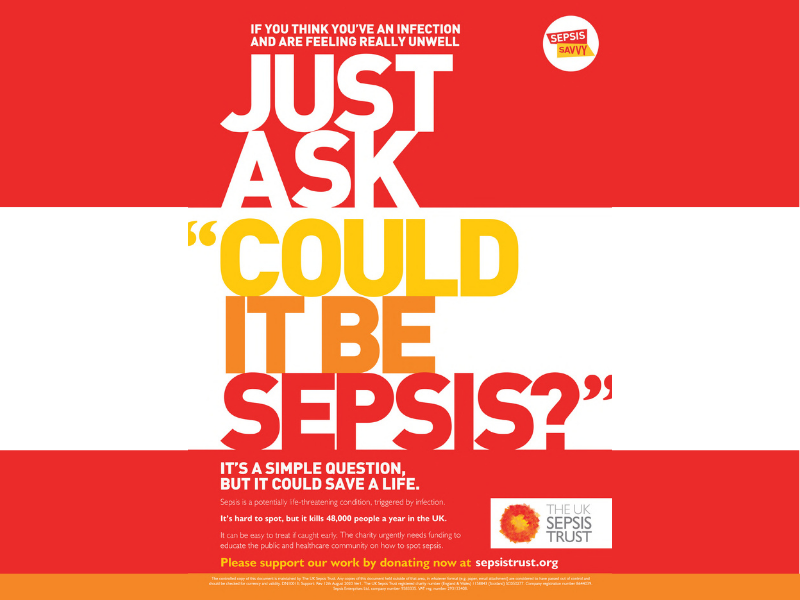
Sepsis is a life-threatening medical emergency that is challenging to diagnose because its early symptoms often resemble those of the flu and other common illnesses. In the UK, sepsis affects an estimated 245,000 people each year and contributes to around 48,000 deaths annually; it can lead to serious complications such as organ failure, amputations, and long-term cognitive or physical impairment.
Why Early Recognition Matters
There is a major campaign to raise awareness of possible early signs and symptoms. It is vitally important to recognise symptoms early and seek treatment promptly.
How Sepsis Develops
Sepsis occurs when the body has an extreme response to an infection. It can develop from a wide range of infections, most commonly pneumonia, urinary tract infections, abdominal infections, and skin infections. It may also occur after an operation or injury if a wound becomes infected.
Recognising the Signs and Symptoms
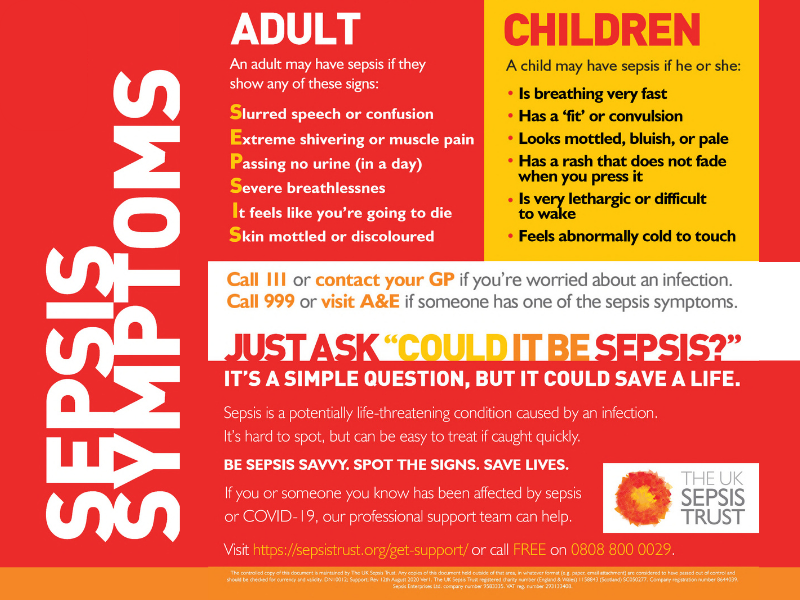
There are key signs and symptoms promoted by organisations such as the UK Sepsis Trust (often summarised as “Just Ask: Could it be Sepsis?”).
Sepsis can be hard to recognise at first, as early symptoms are similar to common illnesses, and also similar to other serious infections such as meningitis.
Early and Common Symptoms (often non-specific)
These symptoms are common in infections and do not always mean sepsis, but should raise concern if worsening, persistent, or unusual:
- Fever or very low temperature
- Muscle aches, fatigue, or feeling generally unwell
- Shivering or feeling very cold
- Nausea or reduced appetite
Red Flag Symptoms (possible sepsis)
These signs suggest the body may be struggling to cope with infection and require urgent medical attention:
- Breathlessness
- Failure to pass urine
- Slurred speech
- Extreme confusion or altered mental state
- Skin changes: In lighter skin, this may appear pale, mottled, patchy or blotchy. In brown and black skin, the skin may appear greyish, ashen, darker than usual, or have a dull or “washed-out” tone. Changes may be more noticeable on the lips, tongue, gums, nail beds, or the whites of the eyes. The skin may also feel cool, clammy, or unusually cold to the touch.
Severe Symptoms (medical emergency)
These symptoms indicate a high risk of severe sepsis or septic shock and require immediate emergency care:
- Severe breathlessness or difficulty staying awake
- Very little or no urine output
- Confusion, agitation, or collapse
- Cold, clammy, or mottled skin with signs of poor circulation
- A sense of impending doom or a feeling that they might die
Important
If someone seems significantly unwell, is deteriorating, or just ‘not quite right’, trust that instinct and seek urgent medical advice, even if not all symptoms are present.
When to Seek Medical Help
Seek urgent medical attention by contacting NHS 111 for urgent advice, attending A&E, or calling 999 if symptoms are severe, rapidly worsening, or life-threatening.
Importantly, if you are sent home from the hospital or GP surgery and the person gets worse, they should be advised to return for urgent reassessment.
Final thoughts
Do Not Wait for All the Signs. Sepsis is not always obvious, and people rarely have every symptom. Waiting for a full picture can delay treatment. If someone is getting worse or does not seem right, seek medical help urgently. Acting early can save lives.
https://www.youtube.com/@TheUKSepsisTrust/videos
dults a sense of ‘impending doom’ or a feeling that they might die.